
"origin standards"
8000 article(s) found

A brief introduction to the History and Culture of the Origin and Development of Vietnamese Fine Coffee beans
At present, the development plan of coffee industry in Vietnam is adjusting its strategic direction according to the following main contents: 1. Change the planting structure and determine the strategic goal of industry development. Reduce the planting area of ROBUSTA coffee and turn the land with low efficiency in coffee cultivation into other perennial cash crops such as rubber, pepper, fruit trees and annual crops such as cotton and hybrid corn. In conditional land

Introduction to the standard sour taste and low taste of Ugandan coffee bean grading method
Uganda coffee beans are classified according to the standard sour taste and low taste. Uganda coffee beans have a unique flavor of delicate flavor, which is very suitable for making Italian and other flavors of coffee. more importantly, Ugandan coffee beans are strictly screened according to the standards of the international market to ensure their high quality and pollution-free characteristics. Africa is the hometown of Arabica and Robusta, the two major varieties of coffee.

Japan UCC Ueshima Coffee Co., Ltd. Ueshima Coffee Shanghai Co., Ltd. Top Ten Books in the World
Coffee is one of the top three drinks in the world. At first, coffee was expensive in Europe. Only aristocrats could drink coffee. Coffee was even called black gold. Coffee, whose price fell as a result of mass production, began to become an important drink for Europeans. Zhong Lirong, vice president of the China Coffee and Coffee Beverage Professional Committee, said in an interview

Carbon neutral coffee
What is carbon neutral coffee? For the origin of carbon neutralization, the New Oxford English Dictionary announced that the annual vocabulary for 2006 is "carbon neutral", which means "carbon neutralization". Carbon neutralization, also known as carbon compensation (Carbon Offset), is one of the efforts made by modern people to slow global warming. Carbon-neutral coffee is carbon-neutral coffee certified by the carbon-neutral organization.

Classification of Coffee in Chinese National Standard
There are more than 60 kinds of coffee, but there are roughly two varieties of coffee grown commercially on a large scale, one is Arabica, accounting for about 70 percent of the world's coffee planting area, and the other is Robasta, accounting for about 30 percent of the world's coffee planting area.

What utensils are needed for hand-brewed coffee _ selection of hand-brewed coffee beans _ gold cup standard for hand-brewed coffee
Professional coffee knowledge exchange more coffee bean information please pay attention to the coffee workshop (Wechat official account cafe_style) hand coffee equipment needed to make coffee the utensils needed for hand coffee are not bulky objects. The fine version of the equipment includes: bean grinder, filter cup, filter paper, hand flushing pot, electronic scale, thermometer, timer, sharing pot and so on. 1 bean grinder there are two kinds of bean grinder: manual and electric
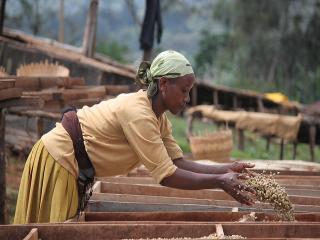
Description of the characteristics and flavor of the standard varieties of Yejiaxuefei coffee beans the taste of hand-brewed coffee in Yega Xuefei producing area
For the exchange of professional baristas, please follow the coffee workshop (Wechat official account cafe_style). In recent years, there are many emerging small producing areas or cooperatives in the producing areas of Sidamo and Yegashev, Ethiopia, which will be sold in the international market under the name of their own cooperatives or farms, which means that for their own coffee.

Coffee bean classification system Coffee beans are classified according to taste?
Professional coffee knowledge exchange More coffee bean information Please pay attention to coffee workshop (Weixin Official Accounts cafe_style) The grade of green coffee beans is set in order to understand the quality of green beans in the coffee trading market and set reasonable prices. It is distinguished by the size of raw beans, the number of defective beans, the altitude of cultivated areas, and the name of regions.
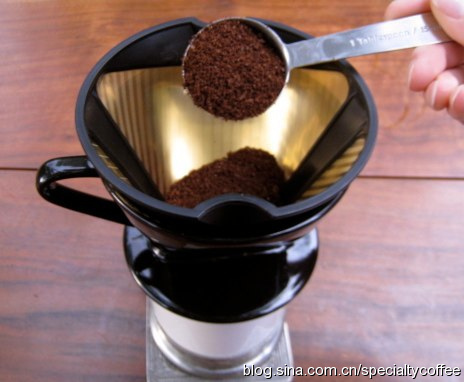
The ratio of coffee to water when brewing coffee. The American SCAA Fine Coffee Association sets the brewing ratio.
(figure Source: google) Standard brewing ratio (Standard Brewing Ratio) number of cups of coffee Cups of Coffee the amount of coffee used by COFFEE TO BE USED WATER TO BE USED by weight BY WEIGHT gauges BY MEASURE ounces Ounces grams Grams teaspoons Tea Spoons spoons Table Spoons cups Cups coffee liquid

National barista professional standard the country's best barista training barista professional qualification certificate
According to the relevant provisions of the Labor Law of the people's Republic of China, in order to further improve the system of national vocational standards and provide a scientific and standardized basis for vocational education, vocational training and vocational skills appraisal, the Ministry of Labor and Social Security organized relevant experts to formulate the "National Professional Standard for baristas (trial)" (hereinafter referred to as "Standard"). I. this Standard is objective.

What are the differences between capping bowls and teapots? Is it better to make tea with a lid bowl or a teapot?
It is not only suitable for beginners but also not suitable for beginners. Everyone who drinks tea should have one. Maybe this is an attractive ceremony, and we, as tea people, yearn for it so much. It is a model of unadorned art. Compared with collectors' tea bowls and unglazed pottery pots, gaiwan is a common appliance. It does not obey
Certificate of boutique coffee 4C coffee certification
C certification is a widely accepted management rule in the world, which involves the sustainable development of coffee cultivation, production, processing and other aspects of the supply chain, including social, environmental and economic principles. Coffee practitioners are required to protect biodiversity, protect all kinds of national endangered animals and plants, correctly use and handle pesticides and other chemicals, and protect the natural environment and people.
Boutique coffee bean knowledge 4C coffee certification
4C certification is a widely accepted management rule in the world, which involves the sustainable development of coffee cultivation, production, processing and other aspects of the supply chain, including social, environmental and economic principles. Coffee practitioners are required to protect biodiversity, protect all kinds of national endangered animals and plants, correctly use and handle pesticides and other chemicals, protect the natural environment and
Basic knowledge of boutique coffee 4C Coffee Certification
4C certification is a widely accepted management rule in the world, which involves the sustainable development of coffee cultivation, production, processing and other aspects of the supply chain, including social, environmental and economic principles. Coffee practitioners are required to protect biodiversity, protect all kinds of national endangered animals and plants, correctly use and handle pesticides and other chemicals, protect the natural environment and
What are the 90 + patent treatment methods? What are the coffee flavor characteristics of 90 + patent treatment? ninety
V professional coffee knowledge exchange more coffee bean information please follow the coffee workshop (Wechat official account cafe_style) Qianjie Coffee brief 90 + patent treatment 90 + founder Joseph Brodsky, he found that the world's high-quality coffee beans originated in Ethiopia, 90% of the raw beans come from the original varieties of Ethiopia, even the rosy summer of Panamanian estates.

Boutique coffee bean certification body 4C Association coffee certification
4C certification is a widely accepted management rule in the world, which involves the sustainable development of coffee cultivation, production, processing and other aspects of the supply chain, including social, environmental and economic principles. Coffee practitioners are required to protect biodiversity, protect all kinds of national endangered animals and plants, correctly use and handle pesticides and other chemicals, protect the natural environment and
4C Coffee Certification, the certification body of boutique coffee beans
4C certification is a widely accepted management rule in the world, which involves the sustainable development of coffee cultivation, production, processing and other aspects of the supply chain, including social, environmental and economic principles. Coffee practitioners are required to protect biodiversity, protect all kinds of national endangered animals and plants, correctly use and handle pesticides and other chemicals, protect the natural environment and
Introduction to the certification body of fine coffee beans 4C coffee certification
4C certification is currently widely accepted in the world, involving coffee cultivation, production, processing and other aspects of the supply chain sustainable development management rules, including social, environmental and economic principles. Coffee growers are required to protect biodiversity, protect various nationally endangered plants and animals, properly use and handle pesticides and other chemicals, protect the natural environment and
Fine Coffee Coffee name and Brand
National place name: indicates the area where coffee is produced. For example, Ethiopia. Harald shows that the product is produced in Harald, Ethiopia. It should be noted here that the name of the country is the same, but when the region and year are different, the quality of coffee is different, and the taste of coffee is not guaranteed to be consistent. Port of export: indicates the port of export of coffee. Coffee of the same origin and brand in the same place.

The quality of boutique coffee beans what are the standards of producing countries and producing areas?
Professional coffee knowledge exchange more coffee bean information Please follow the coffee workshop (Wechat official account cafe_style) now there is an advertisement selling coffee that says, "the first generation drinks instant coffee, the second generation drinks espresso, and now let's enter the third generation to drink hand-brewed boutique coffee." As I mentioned earlier, it is impossible for a good baker to beautify mediocre coffee beans.